


- By ali-steel
- 21 Dec 2024
- Analysis Industrial
- No Comments
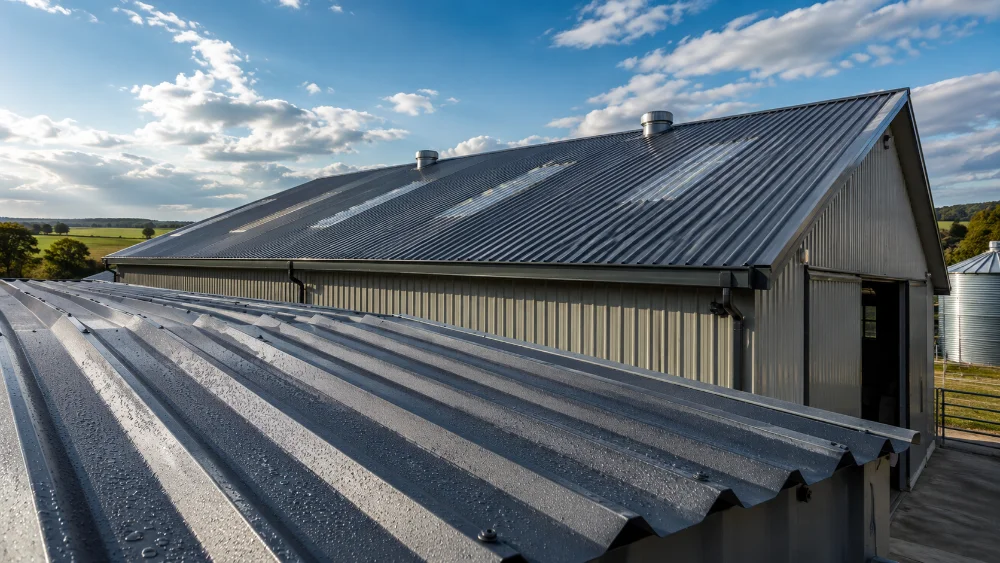
Corrugated roofing sheets remain one of the most practical roofing solutions for industrial, commercial, agricultural, and residential projects.
Their wave-shaped or ribbed design is not only decorative. The corrugation increases the rigidity of the sheet, allowing relatively lightweight material to cover larger areas and resist external forces more effectively than a flat sheet of the same thickness.
Modern corrugated roofing sheets are available in different materials, coatings, colors, and profiles. Selecting the correct option requires an understanding of the building environment, roof design, structural requirements, and expected service life.
At Ali Steel, we provide roofing solutions intended to combine practical performance, consistent quality, and efficient installation.
What Are Corrugated Roofing Sheets?
Corrugated roofing sheets are panels formed with repeated waves, ribs, or trapezoidal sections.
These profiles strengthen the sheet and create drainage channels that guide rainwater toward gutters.
The sheets are generally fixed to steel or timber supports using approved fasteners and washers. Adjacent sheets overlap at the sides, and end overlaps may be used depending on panel length and roof design.
Corrugated roofing is available in:
- Galvanized steel
- Prepainted galvanized steel
- Aluminum-zinc coated steel
- Aluminum
- Fiber cement
- Other specialized materials
Prepainted coated steel is one of the most widely used options because it combines strength, corrosion protection, color variety, and relatively low weight.
Benefits of Corrugated Roofing Sheets
High Strength-to-Weight Ratio
The corrugated profile improves rigidity without requiring extremely thick material.
This allows the roof to remain relatively lightweight while still providing useful structural performance.
Lower roof weight may help reduce:
- Transportation effort
- Lifting requirements
- Installation time
- Structural dead load
- Handling difficulties
The final structural performance still depends on thickness, profile depth, support spacing, and local loads.
Fast Installation
Corrugated sheets can cover large roof areas quickly.
Panels can be produced in project-specific lengths, reducing the number of end overlaps and helping installers complete the roof more efficiently.
Installation speed depends on:
- Roof geometry
- Panel length
- Building height
- Site access
- Weather conditions
- Safety requirements
- Installer experience
Ready-formed sheets from Ali Steel can be supplied according to the required dimensions and profile, helping simplify project planning.
Effective Water Drainage
The ribs of corrugated roofing sheets direct water toward the roof edge and drainage system.
When the profile, slope, overlaps, fasteners, flashings, and sealants are correctly selected, the roofing system can provide effective rain protection.
Leaks are often caused by installation details rather than the steel sheet itself.
Common causes include:
- Incorrect side overlaps
- Insufficient roof slope
- Damaged washers
- Poor flashing
- Loose fasteners
- Incorrect screw placement
- Inadequate sealing
- Blocked gutters
A complete roofing system should therefore be designed as a combination of sheets and compatible accessories.
Durability
Coated steel roofing can provide long-term performance when the correct material is selected for the environment.
Durability depends on:
- Steel thickness
- Metallic coating
- Paint system
- Environmental exposure
- Installation quality
- Maintenance
- Fastener quality
- Treatment of cut edges
- Roof slope
- Internal condensation
A roof installed near the sea may require stronger corrosion protection than one installed in a dry inland location.
Design Flexibility
Corrugated roofing sheets are available in many:
- Colors
- Gloss levels
- Textures
- Profiles
- Rib depths
- Widths
- Finishes
This allows them to suit industrial buildings, agricultural facilities, commercial structures, and architectural projects.
Matching ridge caps, gutters, flashings, trims, and wall sheets can create a complete and consistent building appearance.
Simple Maintenance
A correctly installed metal roof usually requires limited routine maintenance.
Regular inspection can help identify:
- Loose fasteners
- Damaged washers
- Coating scratches
- Blocked drainage channels
- Accumulated leaves
- Sealant deterioration
- Damaged flashings
Addressing small issues early can help prevent larger repair costs.
Common Applications
Corrugated roofing sheets are frequently used for:
- Factories
- Warehouses
- Workshops
- Agricultural buildings
- Poultry farms
- Livestock facilities
- Storage sheds
- Garages
- Carports
- Prefabricated buildings
- Commercial properties
- Canopies
- Residential extensions
- Covered walkways
- Wall cladding
- Fencing
Each application has different requirements.
An agricultural building may contain moisture and aggressive gases. A coastal warehouse may face salt exposure, while an industrial factory may be exposed to chemicals or pollutants.
The material specification should reflect these real operating conditions.
How to Choose Corrugated Roofing Sheets
Select the Appropriate Material
Galvanized steel provides zinc-based corrosion protection. Prepainted galvanized steel adds a colored organic coating that improves appearance and provides additional surface protection.
Alternative metallic coatings may also be considered depending on the project environment and required service life.
The team at Ali Steel can help buyers review material options based on application, exposure, and budget.
Determine the Right Thickness
Steel thickness affects rigidity, impact resistance, fastener performance, and support spacing.
An excessively thin sheet may experience:
- Denting
- Excessive movement
- Noise
- Deformation
- Damage during installation
- Reduced resistance to wind
Thickness should be evaluated together with:
- Profile depth
- Support spacing
- Roof span
- Wind pressure
- Wind suction
- Snow load
- Maintenance access
- Building height
For demanding structures, the specification should be reviewed by a qualified engineer.
Evaluate Coating Quality
The coating system plays a major role in corrosion resistance and long-term appearance.
Ask the supplier about:
- Metallic coating type
- Coating mass
- Primer
- Topcoat chemistry
- Paint thickness
- Back-coat specification
- Exterior suitability
- Color warranty
- Corrosion warranty
A durable roof requires more than an attractive top surface. The metallic coating, pretreatment, primer, and paint must work together.
Choose the Right Profile
Traditional sinusoidal corrugation provides a recognizable appearance. Trapezoidal profiles are commonly used for industrial buildings and may provide strong rigidity and efficient drainage.
When comparing profiles, check:
- Profile depth
- Rib spacing
- Effective cover width
- Side-lap design
- Water capacity
- Support requirements
- Fastener location
The effective cover width is especially important because it determines how many sheets are needed after overlaps are considered.
Confirm the Roof Slope
Roof slope affects how quickly water drains and how well overlaps perform.
Low-slope roofs may require:
- A specific profile
- Additional sealing
- Longer overlaps
- Special fasteners
- A different roofing system
Always follow technical guidance regarding minimum roof slope.
Use Compatible Accessories
Fasteners, washers, flashings, sealants, insulation, and gutters should be compatible with the roofing sheets.
Poor-quality fasteners can fail before the roofing sheet. Contact between incompatible metals can also increase the risk of galvanic corrosion.
Installation and Maintenance
Sheets should be lifted rather than dragged.
Cutting should be completed using appropriate tools, and metal filings should be removed immediately. Hot particles or filings left on the roof may rust and create visible staining.
After installation:
- Clean gutters regularly
- Inspect fasteners
- Repair scratches correctly
- Remove leaves and deposits
- Check flashings after severe weather
- Limit unnecessary foot traffic
- Use suitable walking supports
Conclusion
Corrugated roofing sheets provide a strong combination of efficient coverage, lightweight construction, durability, drainage, and design flexibility.
Their long-term performance depends on selecting the correct thickness, profile, coating, accessories, and installation method.
At Ali Steel, we support customers in selecting roofing sheets based on practical project conditions. Our focus is to provide reliable products, clear specifications, and solutions that help protect buildings while maintaining their appearance over time.


