


- By ali-steel
- 28 Feb 2025
- Business Statistics
- No Comments
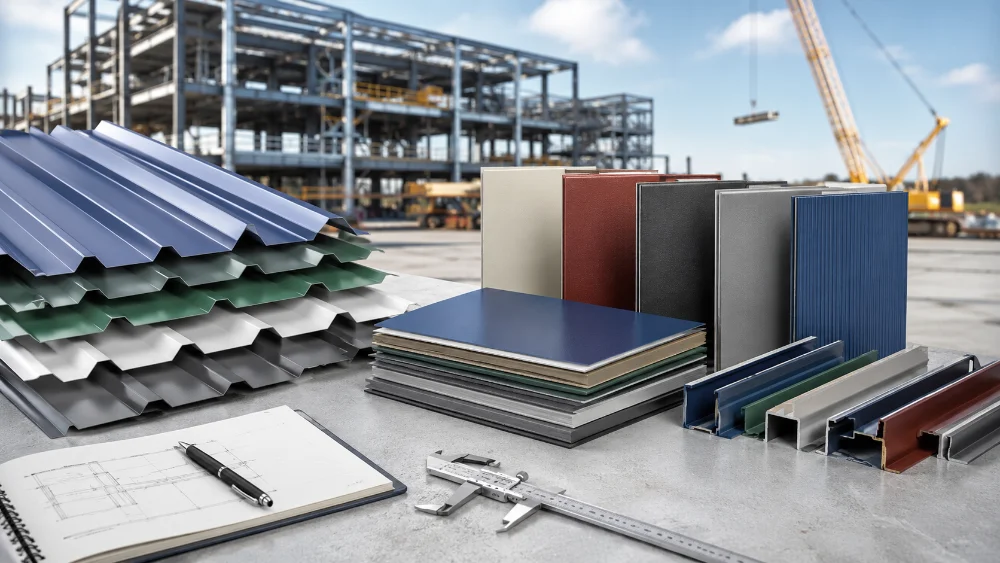
Colored steel sheets have become an essential material in modern industrial and construction projects. They are commonly used in factories, warehouses, commercial buildings, agricultural facilities, prefabricated structures, roofing systems, and exterior wall cladding.
Their popularity comes from their ability to combine structural strength, attractive appearance, corrosion protection, and fast installation. However, colored steel sheets are not all manufactured to the same specifications, and choosing the wrong product can lead to fading, corrosion, deformation, leaks, or unnecessary maintenance costs.
At Ali Steel, we believe that choosing the right colored steel sheet should begin with understanding the actual needs of the project, rather than selecting a product based only on price or color.
Start by Identifying the Application
The first step is to determine exactly how and where the steel sheets will be used.
A colored steel sheet installed as an indoor partition will not face the same conditions as a roofing panel used in a coastal industrial building. Similarly, decorative wall cladding may require different characteristics from sheets used in cold rooms or agricultural facilities.
Colored steel sheets are commonly used for:
- Industrial roofing and wall cladding
- Warehouses and logistics facilities
- Factories and workshops
- Cold rooms and sandwich panels
- Agricultural and livestock buildings
- Prefabricated structures
- Garage doors and storage units
- Interior partitions and ceilings
- Commercial buildings
- Industrial equipment
Once the application is clear, it becomes easier to determine the required thickness, coating type, paint system, profile, and dimensions.
Evaluate the Project Environment
Environmental conditions have a direct impact on the expected service life of colored steel sheets.
A standard coating may perform well in a dry inland location, but it may not provide sufficient protection in a humid, coastal, polluted, or chemically aggressive environment.
Before selecting the material, consider:
- Humidity levels
- Rainfall and water exposure
- Proximity to the sea
- Airborne salt
- Industrial pollution
- Chemical vapors
- Temperature fluctuations
- Strong sunlight and ultraviolet exposure
- Dust and sand
- Condensation inside the building
Agricultural buildings may also contain fertilizers, animal waste, or gases that can affect the underside of roofing sheets.
The team at Ali Steel recommends discussing the project location and surrounding conditions before confirming the coating specification. A suitable coating system can significantly reduce the risk of premature corrosion.
Choose the Correct Steel Thickness
Steel thickness influences rigidity, impact resistance, structural performance, handling, and the ability of the sheet to maintain its shape.
Thin sheets may initially appear more economical, but they can be more vulnerable to:
- Denting
- Vibration
- Oil canning
- Deformation
- Damage during transportation
- Damage during installation
- Reduced fastener stability
Thicker sheets generally provide more rigidity, but they also increase weight and cost. The correct thickness should therefore be selected according to the actual engineering requirements.
Important factors include:
- Distance between supports
- Wind load
- Snow load, where applicable
- Sheet profile
- Rib depth
- Building height
- Roof slope
- Installation method
- Local construction standards
Buyers should also clarify whether the quoted thickness refers to base metal thickness or total coated thickness. At Ali Steel, product specifications can be reviewed with customers to help avoid misunderstandings regarding nominal and actual thickness.
Understand the Coating System
A quality colored steel sheet consists of more than a layer of paint over steel.
The complete system may include:
- Steel substrate
- Metallic zinc or alloy coating
- Chemical pretreatment
- Primer
- Topcoat
- Protective back coat
The metallic coating protects the steel from corrosion. The primer improves adhesion and adds another level of protection, while the topcoat provides the visible color, gloss, and resistance to weathering.
Common paint systems include:
Standard Polyester
Polyester is widely used because it offers a practical balance between cost, appearance, flexibility, and performance. It is suitable for many general construction applications in normal environments.
Silicone-Modified Polyester
This system generally offers improved resistance to sunlight, weathering, and color fading. It may be selected for exterior roofing and cladding where stronger long-term appearance is required.
PVDF Coating
PVDF coatings are often chosen for architectural, commercial, and high-performance applications. They offer strong color retention and weather resistance, especially where the building’s external appearance is a major priority.
The paint name alone does not guarantee quality. Pretreatment, primer quality, coating thickness, curing conditions, and production consistency all affect final performance.
Select the Appropriate Profile
Colored steel sheets may be supplied as flat sheets or formed into corrugated, trapezoidal, tile-effect, or standing-seam profiles.
The profile affects:
- Structural rigidity
- Drainage
- Effective coverage
- Installation speed
- Overlap requirements
- Wind resistance
- Final appearance
A deeper profile may provide greater stiffness than a shallow profile made from the same steel thickness.
For roofing applications, the profile should also be suitable for the roof slope, expected rainfall, and support spacing. Ali Steel can help customers compare available profiles according to practical installation and performance requirements.
Choose the Color and Surface Finish Carefully
Color is an important visual decision, but it can also influence heat absorption, maintenance, and long-term appearance.
When selecting the color, consider:
- Building identity
- Surrounding architecture
- Climate
- Dust visibility
- Heat reflection
- Future extensions
- Local planning requirements
- Color availability
Light colors may reflect more solar energy than darker colors, while dark colors may create a stronger architectural appearance.
Customers should request a physical metal sample whenever possible. Colors displayed on screens or printed catalogs may look different under natural sunlight.
Review Supplier Documentation
A reliable steel supplier should provide more than a price quotation.
Before confirming an order, request information about:
- Base steel grade
- Steel thickness
- Thickness tolerance
- Metallic coating type
- Coating mass
- Primer specification
- Paint system
- Paint thickness
- Color code
- Gloss level
- Coil or sheet dimensions
- Applicable quality standards
- Test certificates
- Warranty conditions
- Storage recommendations
At Ali Steel, transparency in specifications helps customers understand exactly what they are purchasing and whether the material is appropriate for their project.
Consider Total Value, Not Only Initial Price
The cheapest colored steel sheet may not always provide the lowest total cost.
Premature fading, corrosion, deformation, leakage, or replacement can create significant expenses. These may include labor, production interruption, damaged insulation, replacement materials, and loss of building appearance.
A better comparison should include:
- Expected service life
- Coating quality
- Material consistency
- Installation efficiency
- Maintenance requirements
- Warranty coverage
- Technical support
- Availability of accessories
- Delivery reliability
Final Thoughts
Choosing the right colored steel sheet requires a balanced evaluation of the application, environment, thickness, coating system, profile, color, and supplier reliability.
The best product is not automatically the thickest or most expensive. It is the product whose full specification matches the real conditions of the project.
At Ali Steel, we help customers select colored steel sheets based on practical performance requirements, not simply visual appearance. Our goal is to support industrial and construction projects with consistent materials, clear specifications, and dependable service.


